
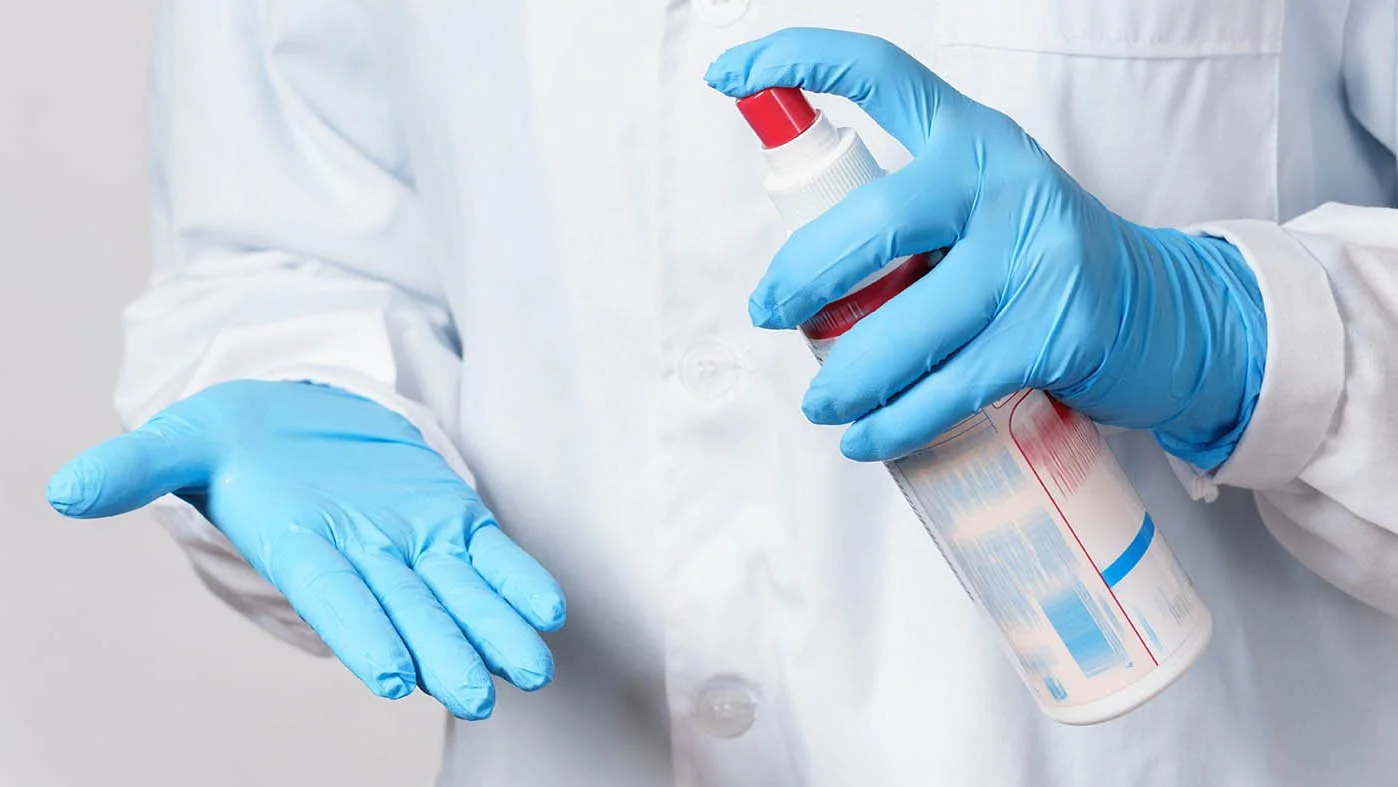
Removing contamination from protective clothing does not necessarily mean that the clothing continues to provide its original level of protection.
Disinfecting wipes are a staple in healthcare settings, but new research suggests that using them on protective clothing may reduce the very protection that PPE is designed to provide.
Healthcare workers rely on personal protective equipment (PPE), including isolation gowns, surgical gowns, and protective coveralls, to prevent exposure to blood, body fluids, and other potentially infectious materials. But what happens when that protective clothing is wiped down with a disinfectant?
A study conducted by researchers from the National Institute for Occupational Safety and Health (NIOSH) and the Centers for Disease Control and Prevention (CDC), published October 24, 2025, in JAMA Network Open, found that disinfecting wipes can significantly reduce the liquid barrier resistance of certain protective fabrics.
The findings raise important considerations for healthcare facilities that use disinfecting wipes to clean protective clothing during extended use, between tasks, or before removing PPE.
What Did the Researchers Examine?
NIOSH researchers evaluated nine models of protective clothing, including isolation gowns, surgical gowns, and coveralls made from different materials.
The researchers tested the fabrics before and after wiping them with two types of commonly used disinfecting wipes:
Quaternary ammonium compound (quat) wipes containing alcohol.
Quaternary ammonium compound (quat) wipes without alcohol.
The study evaluated how well the materials resisted liquid penetration immediately after wiping and again after drying.
The objective was to determine whether disinfecting protective clothing could compromise its ability to serve as a barrier against potentially contaminated liquids.
What Did the Study Find?
The researchers found that disinfecting wipes reduced liquid barrier resistance in most of the fabrics tested.
The degree of reduction varied depending on the fabric construction and the type of disinfecting wipe used.
Several important findings emerged:
Some protective fabrics lost significant liquid resistance. Materials commonly used in disposable gowns were particularly susceptible.
Not all fabrics responded the same way. Laminated and polyethylene-reinforced materials, which have more plastic-like surfaces, generally maintained their liquid resistance.
Both alcohol-containing and alcohol-free quat wipes affected performance. The results varied by material and disinfectant formulation.
Allowing the fabric to dry generally did not restore its original liquid barrier resistance.
These findings suggest that protective clothing may appear intact after wiping while providing less resistance to liquid penetration than originally intended.
Why Does This Matter for Healthcare Facilities?
Disinfecting wipes are designed for specific applications, most commonly the cleaning and disinfection of environmental surfaces and equipment.
A disinfectant's effectiveness against microorganisms does not establish that it is safe or appropriate for use on protective clothing.
During the COVID-19 pandemic, PPE shortages led some healthcare facilities to implement extended-use and limited-reuse practices. In certain circumstances, workers also used disinfecting wipes to remove visible contamination from protective clothing.
Although these practices may have been intended to reduce contamination, the NIOSH findings demonstrate that wiping certain protective fabrics may unintentionally compromise their liquid barrier properties.
This is particularly important when personnel perform procedures involving anticipated exposure to blood, body fluids, splashes, or sprays.
What Should Healthcare Employers Do?
The study does not establish that all disinfecting wipes damage all PPE, nor does it recommend a universal prohibition on wiping protective clothing. However, it reinforces the importance of following manufacturer instructions and evaluating PPE practices carefully.
Healthcare employers should consider the following:
Follow the PPE manufacturer's instructions.
Before using disinfecting wipes on protective clothing, verify that the manufacturer specifically permits the practice. Do not assume that a gown or coverall can be safely disinfected simply because the material appears durable.
Avoid substituting wiping for appropriate PPE replacement.
Disposable protective clothing should be replaced according to manufacturer instructions, applicable infection prevention protocols, and the conditions of use. Wiping should not be considered an equivalent alternative unless the practice has been specifically validated.
Review staff training and infection control procedures.
Ensure employees understand that cleaning a protective garment does not necessarily preserve its protective barrier properties. Reinforce appropriate PPE selection, use, removal, and disposal.
Evaluate PPE based on anticipated exposure.
Select gowns and other protective clothing with barrier performance appropriate for the procedure and anticipated exposure. Pay particular attention to tasks involving substantial liquid exposure.
Review emergency preparedness procedures.
Facilities maintaining contingency plans for PPE shortages should review any procedures involving extended use, reuse, or disinfection of protective clothing.
What Additional Research Is Needed?
The researchers acknowledged that the study evaluated a limited selection of protective clothing and disinfecting wipes.
Additional research is needed to determine the effects of other disinfectant formulations, including bleach- and hydrogen peroxide-based products, as well as repeated wiping and disinfection of other PPE materials.
The findings should not be interpreted as evidence that every disinfectant formulation will have the same effect on every type of protective clothing.
The Bottom Line
Disinfecting wipes play an important role in healthcare infection prevention, but their use must be consistent with the intended application.
The NIOSH research highlights an important distinction: Removing contamination from protective clothing does not necessarily mean that the clothing continues to provide its original level of protection.
Healthcare employers should review their PPE practices, follow manufacturer instructions, and ensure employees understand the potential limitations of disinfecting protective garments.
Protective clothing is only effective when its barrier properties remain appropriate for the hazards encountered.