Eyewash Station Requirements for Healthcare
When a chemical exposure occurs, every second counts.
Eyewash Station Requirements for Healthcare Facilities: What You Need to Know
Emergency eyewash stations play a vital role in protecting employees who work around hazardous chemicals and disinfectants. Healthcare facilities frequently use products that can cause serious eye injuries if accidental exposure occurs, making it essential to have the proper emergency equipment readily available.
The information in this guide is based on the ANSI Z358.1-2014 standard, the nationally recognized guideline for the installation, performance, maintenance, and use of emergency eyewash stations and safety showers. While OSHA requires employers to provide suitable emergency flushing equipment whenever employees may be exposed to corrosive materials, this standard provides the detailed recommendations that many organizations use to help maintain compliance and create a safer workplace.
Why Eyewash Stations Matter
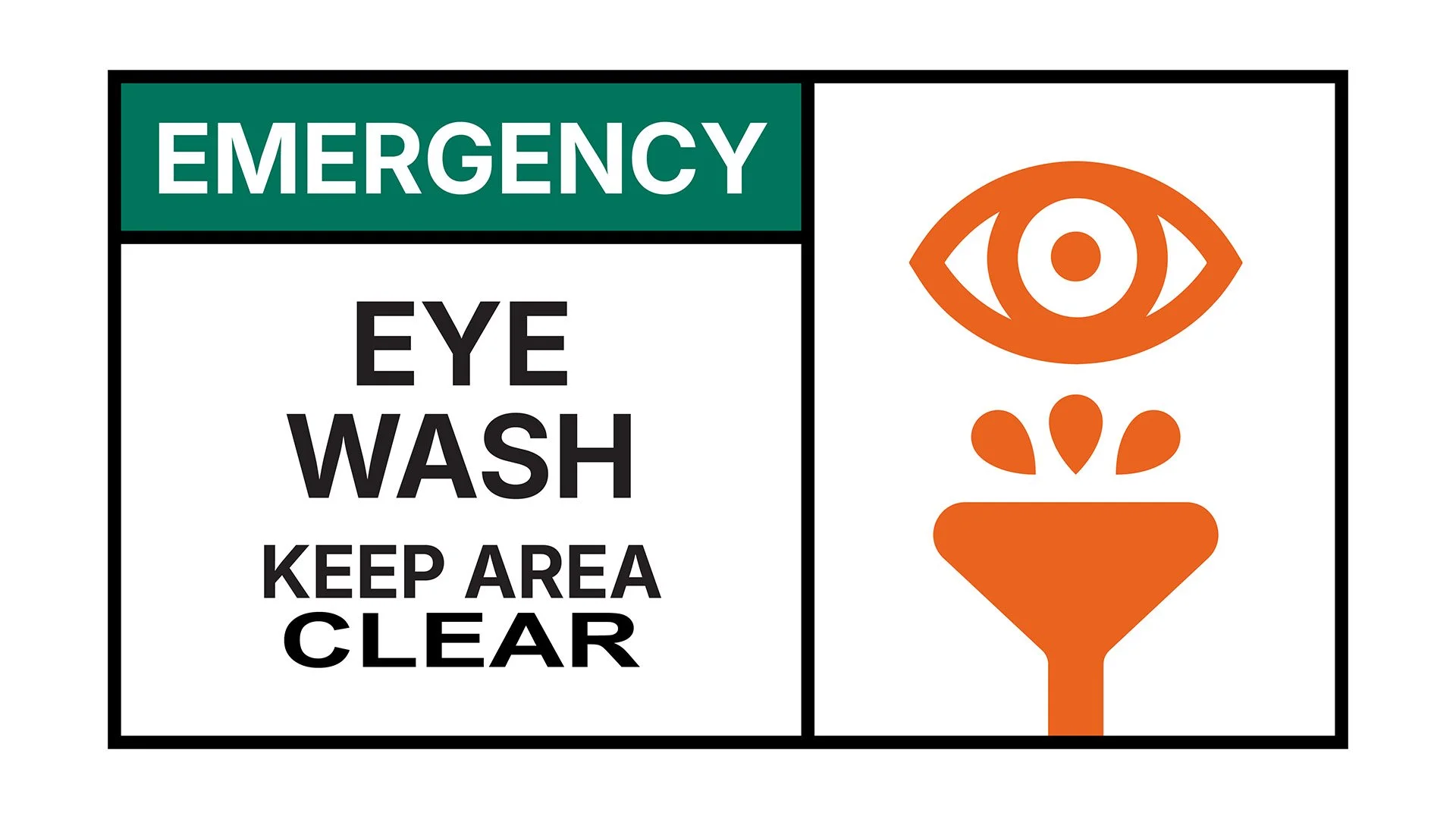
When a chemical exposure occurs, every second counts. An emergency eyewash station allows employees to immediately flush hazardous substances from their eyes, helping reduce the risk of permanent injury. Proper installation, regular maintenance, and employee training all help ensure the equipment functions as intended when it's needed most.
Weekly Inspection and Activation
Eyewash stations should be:
Activated and inspected at least once every week.
Tested to verify proper operation and water flow.
Documented with the inspection date and the name or initials of the employee who performed the inspection.
Routine inspections help identify issues before an emergency occurs and ensure the equipment remains ready for use.
Tepid Water Supply
ANSI requires eyewash stations to deliver tepid water between 60°F and 100°F.
Water that is too cold or too hot may discourage employees from completing the recommended 15-minute continuous eye irrigation, reducing the effectiveness of emergency treatment.
One-Step Activation
The eyewash station should:
Activate in one second or less.
Remain on without requiring the user to hold the control open.
Allow both hands to remain free while flushing the eyes.
Simple operation is critical during an emergency when every second matters.
Accessible Within 10 Seconds
Employees should be able to reach an eyewash station:
Within 10 seconds, or
Approximately 55 feet from the hazard.
The path to the eyewash station must remain unobstructed at all times.
Clear Access
Nothing should block access to the eyewash station, including:
Storage boxes
Equipment
Furniture
Closed or locked doors
Quick access can significantly reduce the severity of an eye injury.
One-Step Plumbed Eyewash Stations
One-step plumbed eyewash stations connect directly to the building's water supply, providing a continuous flow of water during an emergency.
These stations are commonly preferred because they:
Deliver an uninterrupted water supply.
Activate quickly with a single motion.
Require minimal employee training.
Help organizations align with ANSI recommendations.
Common styles include:
Wall-mounted eyewash stations
Pedestal-mounted eyewash stations
Combination safety shower and eyewash stations
The best option depends on your facility layout and workplace hazards.
When Is an Eyewash Station Required?
OSHA requires employers to provide appropriate facilities for quick drenching or flushing whenever employees may be exposed to corrosive materials.
Corrosive chemicals generally include substances with a:
pH less than 2.0, or
pH greater than 11.5
Common examples found in healthcare settings may include:
Bleach
Formaldehyde
Sodium hydroxide
Glutaraldehyde
Other chemical disinfectants and cleaners
Even small quantities of corrosive chemicals can trigger the need for emergency eyewash equipment depending on how the products are used.
Review Your Safety Data Sheets (SDS)
One of the easiest ways to determine whether an eyewash station is required is by reviewing your facility's Safety Data Sheets (SDS).
Pay close attention to:
Hazard classifications
Corrosive warnings
First-aid recommendations
GHS pictograms
The Corrosion pictogram, which shows liquid damaging a hand and a metal surface, indicates that the product can cause severe skin burns or serious eye damage and should be evaluated carefully as part of your hazard assessment.
Regularly reviewing your chemical inventory and SDS documents helps ensure your emergency equipment matches the hazards present in your workplace.
Best Practices for Healthcare Facilities
Beyond meeting the minimum requirements, healthcare organizations should establish procedures to keep eyewash stations ready for use.
Best practices include:
Conduct weekly documented inspections.
Train employees during onboarding and annual safety training.
Keep access paths completely clear.
Verify water temperature remains within ANSI recommendations.
Include eyewash stations in routine workplace safety inspections.
Review chemical inventories whenever new products are introduced.
Protect Your Employees Through Compliance
Emergency eyewash stations are a critical component of workplace safety in healthcare environments. Following the ANSI Z358.1-2014 standard helps ensure employees have immediate access to effective emergency eye irrigation when accidental chemical exposure occurs.
Regular inspections, proper installation, employee training, and routine review of your chemical hazards all contribute to a safer workplace and stronger OSHA compliance efforts.